‘The Poetry Project’ supports youth with refugee background to express experiences through poetry
Click on the image to go to the website!

The Poetry Project is an innovative literary dialogue project that supports young people with refugee backgrounds as they express their experiences through poetry. The project specifically uses the poetic form to express and preserve feelings and stories in verse. Things that seem unspeakable at first are transformed into an artistic dialogue; conversely, things that once seemed “foreign” become more familiar. To the Poems →

Yasser Niksada was 13 years old when he came to Germany. He’s originally from the Panjshir Valley in Afghanistan, but his family fled from the Taliban to Tehran when he was still a small child. His parents saw no prospects for the young Yasser in Iran and sent him to Europe on his own.
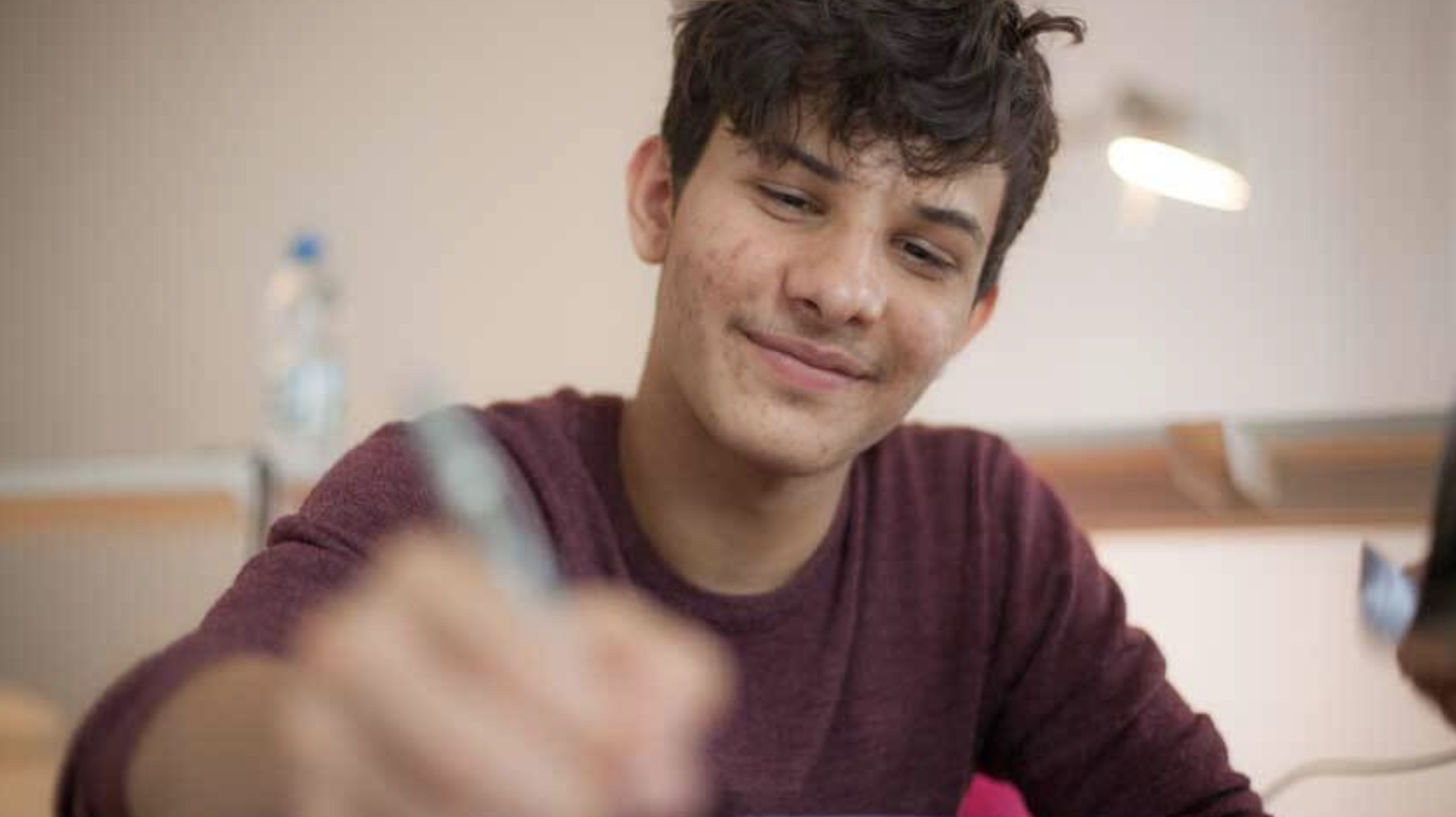
Image: © Rottkay

Barely a year later, Yasser wrote his first poem, “Traces,” about his experiences on the run. "I suppressed some of the things that happened on the way. They only come up again now through writing, and that’s a form of closure," he said in an interview with ZDF tivi in 2017. "Someone who grew up in security and prosperity can't understand that. But if you explain it, for example in a poem, people might think about what would happen if they were to suffer the same fate: war, desolation, or hopelessness. Then they can relate to it and understand it better."

In Iran, as in Afghanistan, poetry plays an important role, as project founder and SPIEGEL foreign correspondent Susanne Koelbl has repeatedly observed on her journalistic travels. Feelings and stories are preserved in verses and are recited in everyday situations—whether at dinner, during a taxi ride, or while shopping. The Poetry Project is built on this narrative tradition, which thrives on a special linguistic density and emotional depth. Things that at first may seem unspeakable are thus transformed into an artful dialogue; conversely, understanding is fostered for what initially appears “foreign.”

From 2017 to 2019, The Poetry Project was supported by the Federal Ministry for Family Affairs, Senior Citizens, Women and Youth, as part of the federal program “Demokratie leben!” (Living Democracy!), and by the Bundeszentrale für politische Bildung with the project “Flucht und Ankunft” (Flight and Arrival).
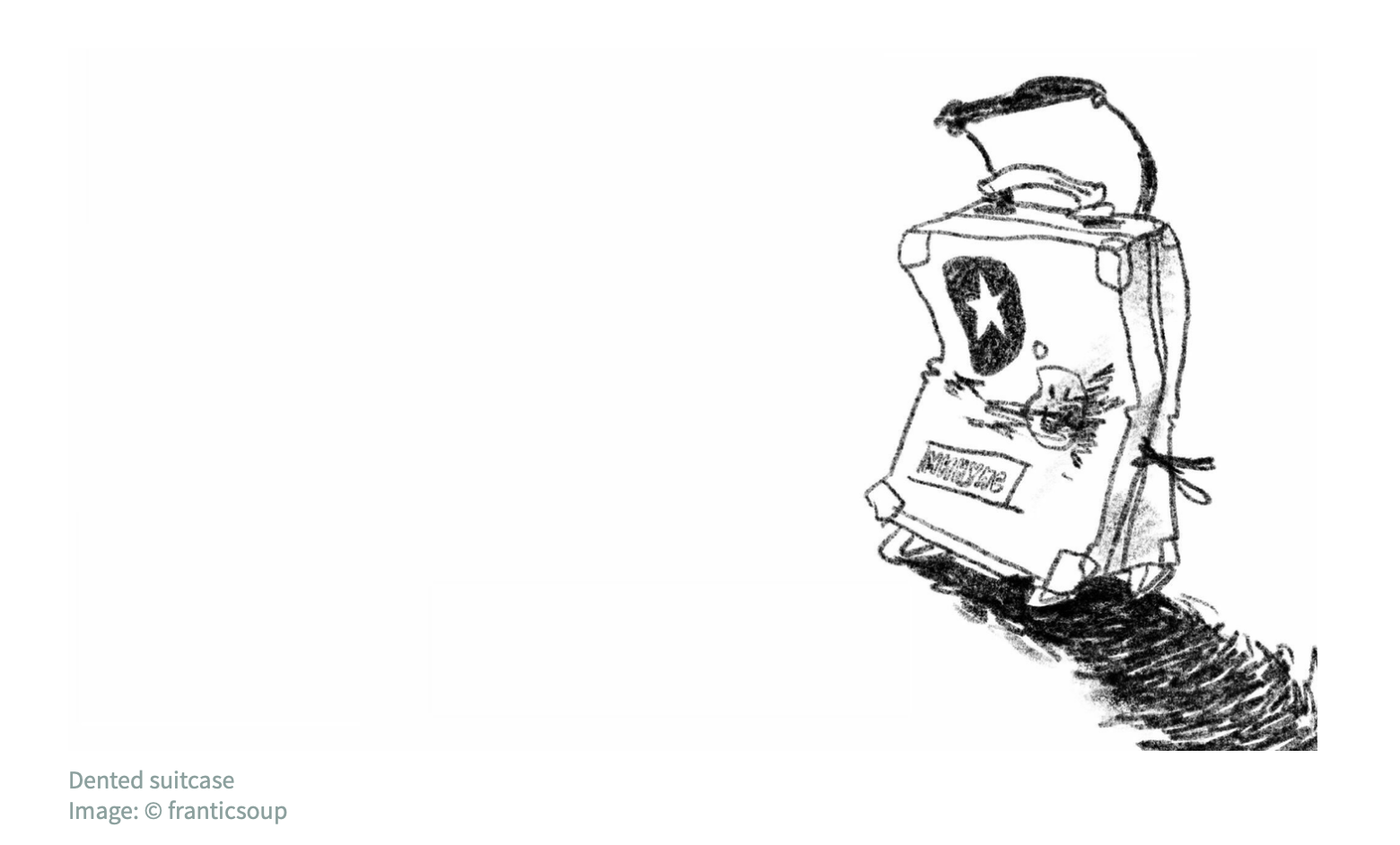
Throughout Germany, young people with and without a refugee background met regularly with workshop leaders and translators to write poetry. In all, around 750 writers got together and wrote thousands of poems. The idea came from project founder Susanne Koelbl, who repeatedly experienced the power of poetry during her work as a SPIEGEL foreign correspondent in countries such as Afghanistan and Iran. She encountered poetry in all kinds of everyday situations, whether in a cab or over dinner, and was able to give space to emotions that would otherwise not find expression. Berlin artist Rottkay provided photography and visual design for the project, while Theresa Rüger took on organizational and literary management.


The young poets wrote in their native languages about subjects that affect us all. About what they’ve experienced, their expectations, how they imagine their future to be. About foreignness and longing, about hope and love, and contemporary politics.

Their works were presented at the end of each workshop day, with the whole group working together to find the best-fitting translation for a particular passage, word, or term. These were wonderful moments of mutual recognition which we hoped to bring to the public. The poems that were drafted in our workshops were presented at readings and festivals, in magazines, radio reports, in plays and in films, so that the ongoing intercultural dialogue could include as many people as possible even beyond the project’s duration.
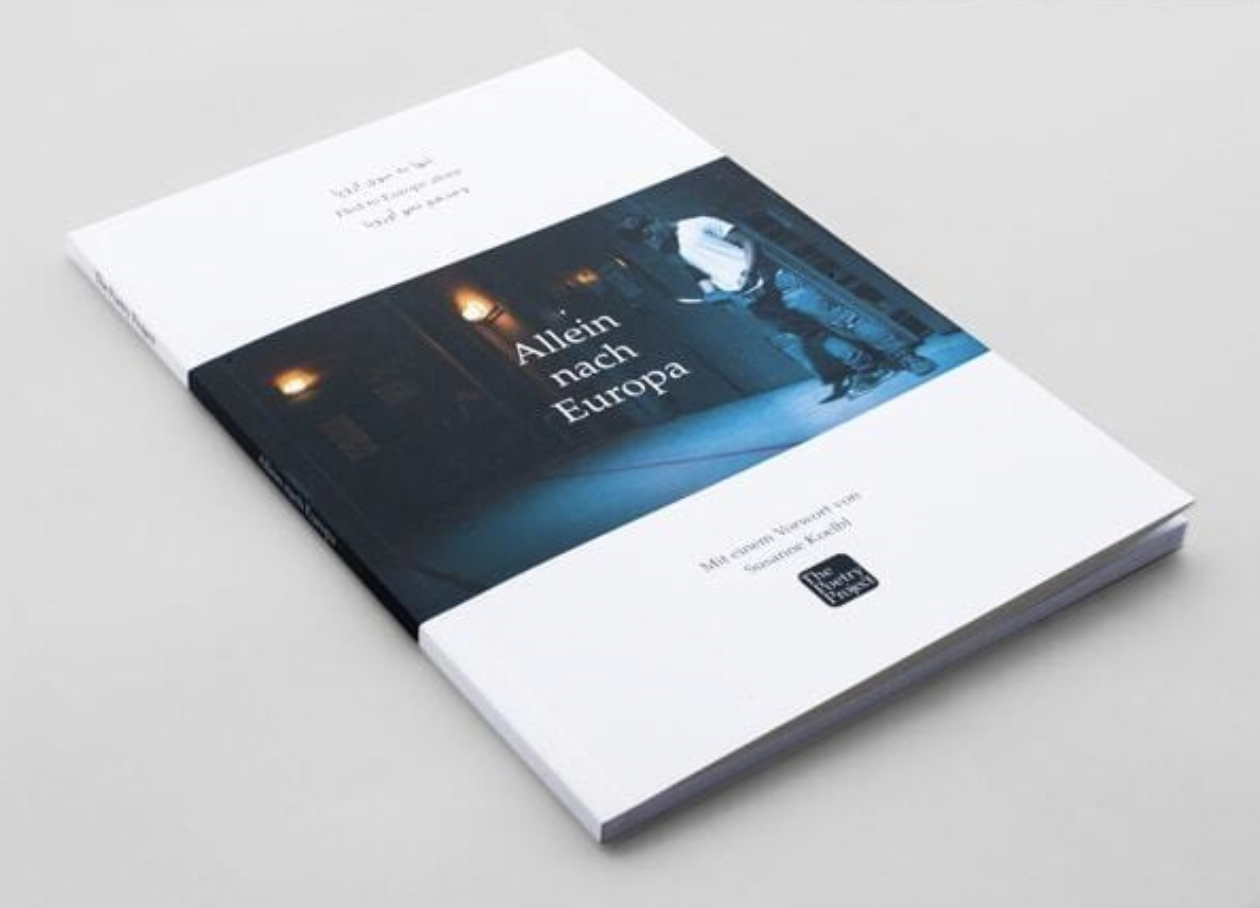
The first volume of poetry was published along with the opening of the international literature festival berlin in 2016. The texts published there were awarded the Else Lasker-Schüler Poetry Prize in 2018. A print edition of these texts in four languages is now available from our online shop under the title Allein nach Europa (Fled to Europe alone). In 2019, our poets Rojin Namer and Shahzamir Hataki received the THEO (Berlin-Brandenburg Prize for Young Literature) in the categories Poetry and Multilingual. Rojin has also won several awards at the lyrix (national competition for young poetry). She won a monthly competition in 2019 and won the annual competition for 2020; in 2022 and 2023 she joined the prize jury. At the end of the project, a comprehensive anthology was published under the title Ich wollte bleiben. Ich ging. (I wanted to stay. I left.) which is also available in our shop.

Click on the image to listen!

Workshops

Have you fled to Germany? Is your mother tongue Arabic, Kurdish, Persian or Ukrainian? Are you between 15 and 27 years old? Would you like to write about your experience alongside others? Then get in touch with The Poetry Project! They can be reached by email, WhatsApp or Instagram.

Readings

Do you think their poets' works are fantastic? Would you like to give them a stage to read their poetry? The Poetry Project organizes many different reading events throughout Germany and look forward to hearing from you.

Internships

They are looking for interns to join their small team in Berlin-Mitte year-round. Questions and unsolicited applications are always welcome; contact them by email.

Volunteering

Are you interested in their project concept? Would you like to volunteer a few hours a week? Do you feel that your knowledge of languages, people, poetry, social media, or fundraising might be a good addition to The Poetry Project? Then get in touch!

Donations

The Poetry Project is funded by grants but rely on additional funding to implement all their plans and support young poets. They are therefore very happy to receive donations — even small contributions make a big difference. Donations in kind are also welcome. They are happy to issue receipts for donations. Please get in touch right here! thank you.

Benne van der Velde

After thoroughly enjoying the Dutch slam poetry scene in the early and mid 2000s (with wins in 7 cities and eventually a place in the Nationals of 2012) and performances at the Lowlands-, Uitmarkt- and Parade festivals a/o, Benne successfully made the transition from the stage to paper by signing his first publishing deal in 2005. Since then 4 publishing houses (kleine Uil, Douane, Nadorst and Stanza) released volumes of his poetry. For a 5th (Passage) he co-edited an anthology of satirical/pamphlet poetry with fellow poets Daniel Dee and Alexis de Roode.

As a member of the artist movement ‘Het Ongeboren Idee’ he helped to organize (and was part of/presented) cultural lo-fi festivals, exhibitions, making a movie, monthly poetry stages in his hometown of Vlaardingen (Poezie in De Steeg), Rotterdam (De Poetsclub) and Nijmegen (Late Letteren Live) + a talent show for bands.

In 2002 and 2003 he studied ‘writing for performance’ at the vocational university of the Arts in the city of Utrecht (HKU) and as a result saw 3 of his theater plays make it to a stage. Writer Hiekelien van den Herik and he co-wrote a knight spectacle play complete with real choreographed sword fights, men in heavy plate armor and more great stuff like that. Theater-/enactment group Ridderspoor performed said play in 2004 and 2005 at Het Archeon, during De Kasteeldagen and at an Elfia-fantasy fair. He also gave numerous poetry and rap workshops at schools and other institutions. There were a lot of collabs too, for example voice-over work for a Rock Opera, a monumental art project for which he partnered up with the artist Erwin Adema and thrice alongside the R.J.S.O (The Rotterdam Youth Symphony Orchestra).

Benne has been an editor for several literary magazines (Krakatau, Renaissance and Op Ruwe Planken), at one time he and his wife owned a secondhand bookstore, he’s been the official poet laureate for his hometown of Vlaardingen and released his first and only Dutch rap-EP in 2011. In 2012 he rapped his way into the finals of Art Rocks. An EP with songs in English followed in 2021. A year later he started translating Dutch musical and lyrical classics from Dutch into English, and vice versa. Some of his short sci-fi and fantasy stories have found their way to medium related websites, magazines and anthology’s.

According to the poet himself rewriting his own poetry, lyrics and prose in English somehow feels like the next logical step in his career, a way to open up to the world at large. Which is both exhilarating and terrifying. So far several of these translations have been published in Bebarbar, Hare’s paw, Festivalforpoetry, Punt Volat, The Dewdrop, The Dillydoun Review and Months to Years a/o.

In everyday (some claim real) life he worked as an industrial tank cleaner, in pest control, on a garbage truck, driving a forklift, in a chemical waste facility, on a Ferry and 10 years as a bartender in a cannabis bar. At the time of writing this resume he can be found at home or in the hospital battling throat cancer. He’s been off the Herb since 2008, has a wife, 2 dogs, mild anxiety issues and likes to read every sci-fi and fantasy classic he can find.

www.linkedin.com/in/benne-van-der-velde-8b17a7296

The poet/lyricist and author Rob Chrispijn: ‘Benne writes sentences that stick; clean, dark and intense. This way a poem lasts!’

The poet Philip Hoorne on the website Poetry rapport: ‘There’s a genius hiding in Benne van der Velde, those are the Good Tidings of today. Amen.’

https://www.doubledutchmagazine.com
Next
Next

Lucy Olsman about ‘The happy hunting grounds’ by Dutch writer Nanne Tepper, featured on Double Dutch magazine!