Lucy Olsman about ‘The happy hunting grounds’ by Dutch writer Nanne Tepper, featured on Double Dutch magazine!
Nanne Tepper: Master of the Dutch Language
By Lucy Olsman
Nanne Tepper (1962-2012), deep admirer of Vladimir Nabokov, despiser of Harry Mulisch (“Shit book. Farce. Fried plaice: all fish bone.”), was one of the most astounding writers I’ve ever come across. His words have completely taken a hold of me these past months, after I randomly visited an interview with the writer of his biography, Lodewijk Verduin, in Groningen. I knew nothing about him, apart from that he ended his life in 2012, in his fisherman’s home next to the Noorderplantsoen, the very park I moved to three weeks ago.
“I’ve been batshit crazy for years and years. Have stared at the ceiling for a decade, searching for a beam for my noose. Nobody in psychoanalysis understands this. Yes, ‘as I child I was unhappy already.’ But when I state ‘as an embryo I was unhappy already,’ people give up. And still, now that I don’t do anything but work at a doomed writership (I’m not about the Genius), I preach across from people who studied that the source of all misery and decisiveness doesn’t stem from my youth.” (own translation of De Kunst is Mijn Slagveld, 2016)
Tepper claims he’s so unhappy because of how passionate he is. This passion is what grabs me each time I’m lucky enough to spend a quiet moment or two with his work. He’s a writer from Eastern Groningen, from the town of Hoogezand. Eastern Groningen is mostly rural, defined by its countryside and farmland. Looking at it at first glance, it might not seem much. It’s flat, green, and without much worth noting. That is what I thought, until Tepper showed me otherwise. First I’ll show a passage in Dutch, followed by the translation.
“Ik wil niet weg, ik wil niet weg, ik wil niet weg. Land. Het kerkhof ligt aan het moeras en alles is zwart, daar, land en groen en de sloten en de – en toen was er altijd dat land tot aan de einder, en als de jongens hooien gingen – ik was geen boer, en toen pa doodging, was ik alleen, met moe, en ik zat met de varkens en de tuin en ik ging naar kantoor, op Woudbloem, en ik kon altijd wel grienen om de zomer.” (De Eeuwige Jachtvelden, 2022)
The translation: “I don’t wanta go, I don’t wanta go, I don’t wanta go. Land. The churchyard’s abuttin’ on the marsh an’ it’s all black there, an’ comes time it’ll all be black ‘n mud, but now there’s still land ‘n green ‘n the ditches ‘n the – there was al’ays that land far’s you could see, when the boys were makin’ hay. I wasn’t any farmer, when Pa died I stayed alone with Ma, I had to tend to the hogs ‘n the kitchen patch, an’ I want to work at the office, up to Woudbloem, but summertime always choked me up.” (The Happy Hunting Grounds, 1999)
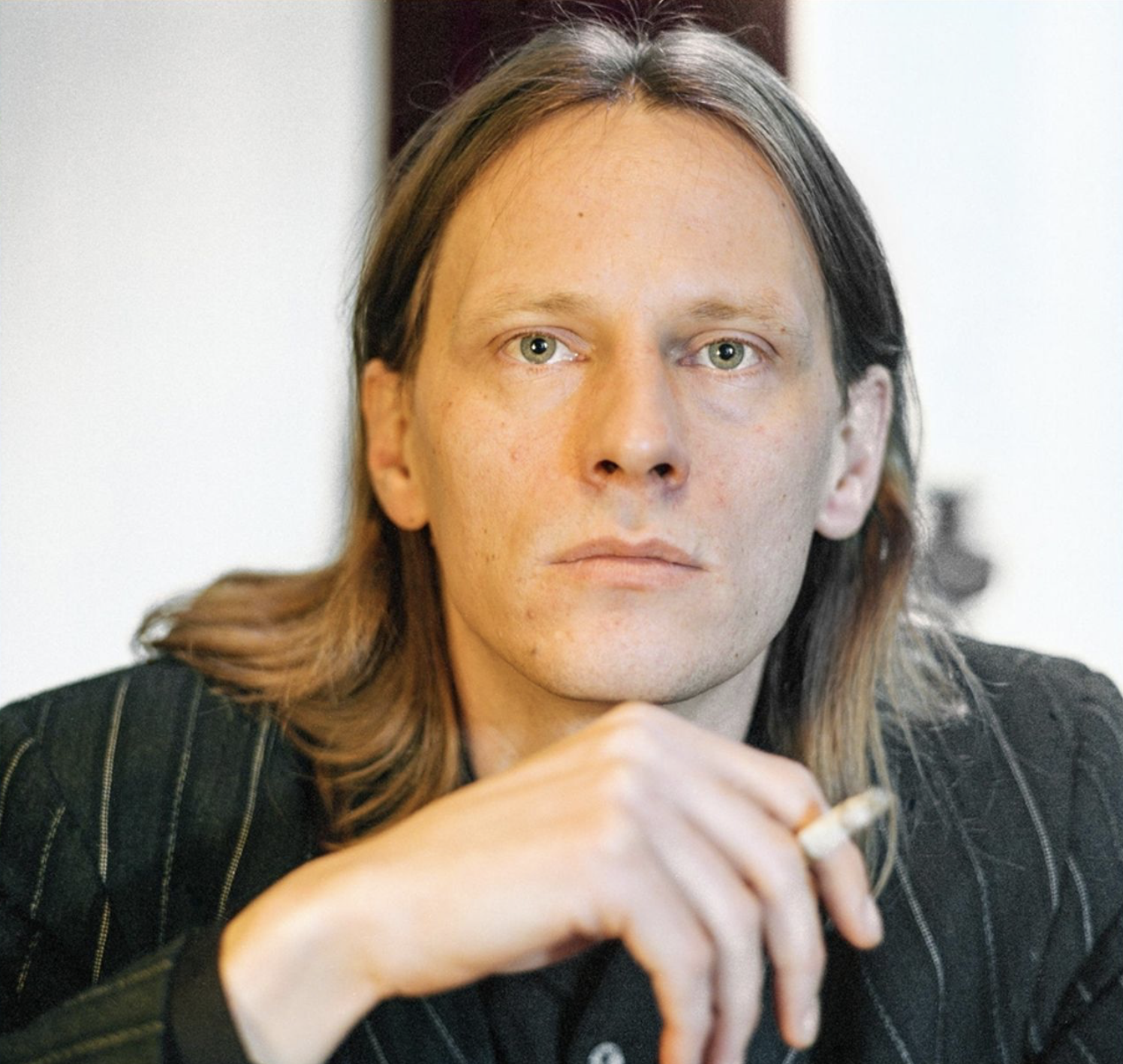
Nanne Tepper, copyright Harry Cock, taken from this article
“I don’t want to go.” From what I’ve learned about Tepper, he really didn’t like having to move to Veendam when he was ten. I get the impression that, while he claims that his problems don’t lie in his youth, he wanted nothing more than to savour some of its innocence and unscathedness. In his letters to fellow writers, he refers to his then-girlfriend as his “little sister.” This ties into the story of De Eeuwige Jachtvelden, where Victor Prins, the protagonist, has an incestuous relationship with his sister Lisa. To me, that symbolizes a deep desire to return to a kinder past.
Tepper writing about the characters in De Eeuwige Jachtvelden: “No, we stay gloomy and see the land from afar, wet and black and stinking of mud and rotting foliage and there, on the side, Lisa jumps in the deep, and then Anna, and then Victor, and I stay behind, with my hands in my hair, and the black hole in front of my nose and I must make new ghosts quickly, quickly, because otherwise I’ll be taken down in my mind, and the monitors-of-crazy won’t know what hit them.” (own translation of De Kunst is Mijn Slagveld, 2016)
Why is it that a novel about incest is considered one of the most brilliant Dutch novels? I think it’s because the love between Lisa and Victor transcends a romantic connection. The bond they share is not defined by sexual feelings, though these are definitely present. Rather, it’s a deep, vital connection that stems from a troubled childhood in a dysfunctional family. They find a home within each other, a sense of comfort that their actual home wasn’t able to offer. Their love, I think, symbolizes the necessity of a stable foundation, someone to rely upon when growing up. The theme is also gloriously captured in a masterfully chosen combination of words. “Iets duurde heel erg lang. Wat er kwam was een hand. In zijn nek. Hij liet zich, walgend van zichzelf, neertrekken, zijn hoofd op haar borst, haar hand in zijn haren.” (2022) or “Something took a long time coming. What came was a hand. At his neck. Sick of himself, he let himself be pulled down, his head on her breast, her hand in his hair.” (1999)
An English translation has been made of De Eeuwige Jachtvelden, like demonstrated and linked to above. While I think it’s a great thing that this incredible novel is made accessible to non-Dutch speakers, the translation isn’t always able to capture the radiant language Tepper employs. For instance:
“Het geheugen was door schrijvers beschreven, bewierookt en vervloekt. Zijn geheugen – enkel dit wist hij er, op een ochtend in Parijs, na een majestueus ontbijt en een nacht zonder slaap, over te zeggen – was gevormd door de vreugden en wreedheden van zijn esthetiek. Hoe hij die had ontwikkeld, wist hij niet, wilde hij niet weten. Feit was dat hij door het leven ging met die blik over zijn schouder. De tegenwoordige tijd bestond enkel in zijn herinnering. Psychiaters hadden hem deze zienswijze afgeraden. Tevergeefs. Hij zwolg vol overgave in het verhaal van zijn leven. De enige reden om door te gaan – zij cultuurgoedje in zijn knapzak – was om dat lange lint waaraan zijn herinneringen wapperden, als vlaggetjes tijdens het dorpsfeest, langer te maken.” (2022)
“Writers had talked about, fawned over and vilified memory. His memory – this was all he knew to say about it of a morning in Paris, after a majestic breakfast and a night without sleep – was shaped by the joys and vagaries of his aesthetic. How he had developed those, he didn’t know, nor did he want to. The fact was that he went through life with that look over his shoulder. The present tense existed only in his recollection. Psychiatrists had warned him against this view of things. In vain. He wallowed with abandon in the story of his life. The only reason to go on – cultural baggage in his old kit sack – was to make that long ribbon on which his memories flapped, like pennants during the village festival, even longer.” (1999)
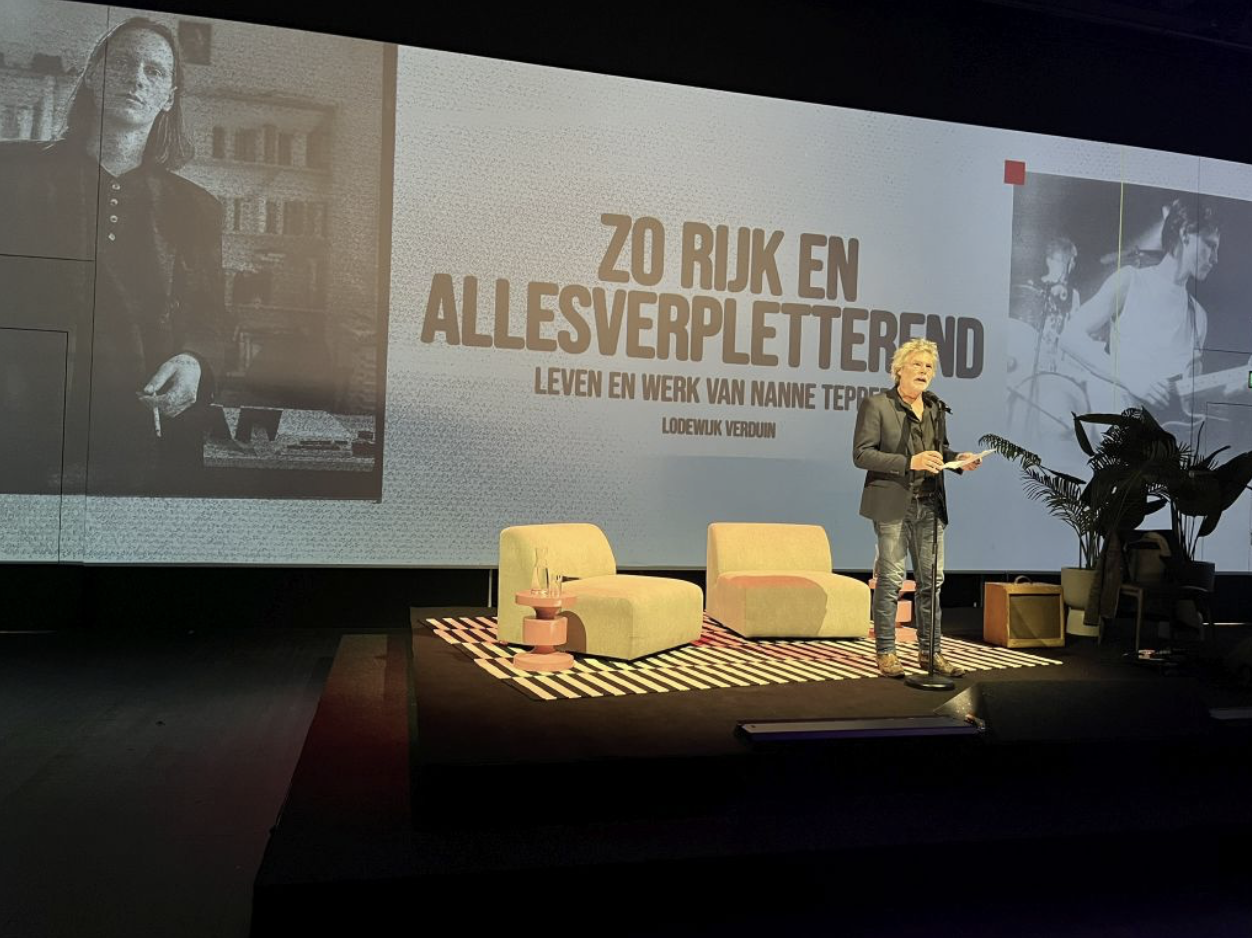
Click on the image for a loving column about Nanne (in Dutch) by Herman Sandman!
The staccato sentence structure in Dutch makes for a more fragmented idea of memory. “...enkel dit wist hij er, op een ochtend in Parijs, na een majestueus ontbijt en een nacht zonder slaap, over te zeggen…” versus “this was all he knew to say about it of a morning in Paris, after a majestic breakfast and a night without sleep.” Some of the magic of a fragmented past that the narrator seems so desperate to capture and take hold of, gets lost in the fluidity of the translation. Nevertheless, some words in the translation are brilliantly chosen: “flapped” has a similar connotation as “wapperen,” and “He wallowed with abandon in the story of his life” is simply gorgeous, and akin to “Hij zwolg vol overgave in het verhaal van zijn leven.”
Also deeply touching is the way the narrator describes Lisa:
“Na schooltijd lag ze in de tuin, onder de twee berken, aan de rand van de moestuin, gekleed in een goudglanzende, crèmewitte bikini, haar billen, ferme billen, lonkend naar de hemel, een kuitbeen met lange smalle voet omhoog en wiegend, haar hoofd rustend op een hand, haar zwarte haren verward, haar rug glooiend en glanzend van het zweet, haar borsten verborgen, haar blik in een boek dat hij haar had aangepraat.” (2022)
“After school she lay in the garden beneath the twin birches, at the edge of the vegetable patch, dressed in an off-white bikini with a golden sheen, her buns, firm buns, taunting the heavens, a calf with narrow foot raised and rocking, her head resting on one hand, her black hair a jumble, her back rolling and glowing with sweat, her breasts hidden, her eyes in a book he’d told her to read.” (1999)
Here, too, the translation loses some of the magic. Instead of ‘off-white’ I would have chosen ‘cream white’ to stay true to the original. I also think there’s an undertone of regret in the line “haar blik in een boek dat hij haar had aangepraat,” while “her eyes in a book he’d told her to read” feels way too matter-of-fact to be appropriate here. “Her eyes in a book he’d talked her into reading” preserves some of that regretful energy. I do think the line “her back rolling and glowing with sweat” is greatly written and captures just the right tone.
Tepper feels to me like a friend. At the time of devouring his work, I’m trying to make my way in the Dutch world of literature, much the same way he did. On a good day, I’m taken by what he calls “the white flood,” meaning a rush of inspiration. When that flood evaporates, it’s difficult to get back in the saddle and get the pen on the paper again. When I look out my window and see the glittering green of the Noorderplantsoen, I think of Tepper, and how I’m lucky enough to live so close to where he chose to spend part of his life. Reading his work never fails to drive me right back to the drawing table when it comes to poetry, and my novel.
I’d like to end this piece with a couple of his most fantastic letter closings:
“Lots of luck, inspiration and work drive for your new career. Onward, said the farmer, leaning on his hoe, looking to the far and beyond, scratching his balls.” And, “Drink one or uncountable to me, in the old night, and I’ll drink one, or two, to you and your guests.” (own translation of De Kunst is Mijn Slagveld, 2016) Give his work a go, it’ll be the best thing you do this year!
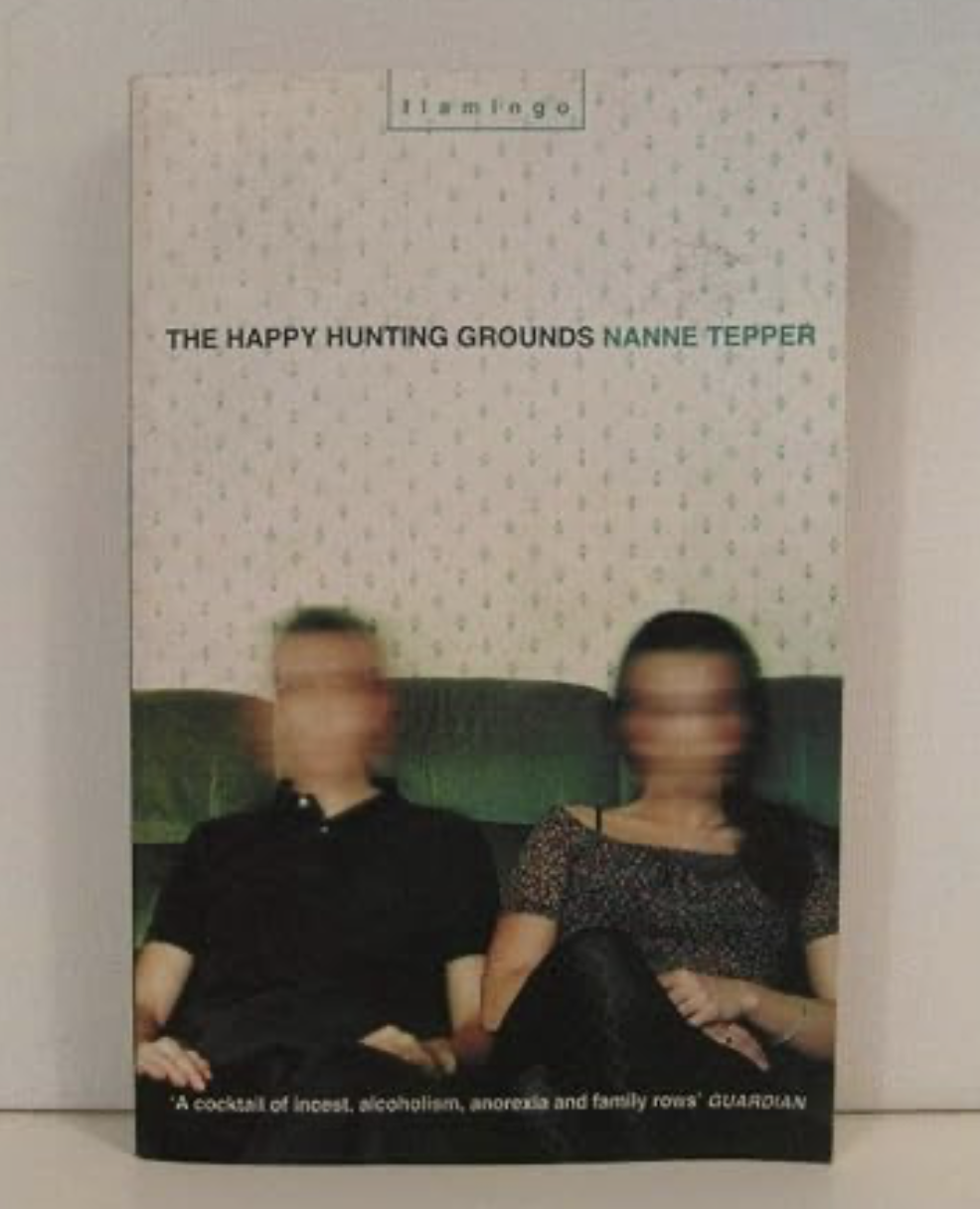
Click on the image to do just that!
‘The happy hunting grounds’, published by Flamingo / Harper Collins in 2000. The translation of this Dutch gem: Sam Garrett. Sam Garrett has translated some 50 novels and works of nonfiction. He has won prizes and appeared on shortlists for some of the world’s most prestigious literary awards, and is the only translator to have twice won the British Society of Authors’ Vondel Prize for Dutch-English translation.
What the press had to say:
''The Happy Hunting Grounds' is constructed in the form of a symphony, with four distinct movements, each different in style and tempo. It is dense, learned, oblique and allusive (though not intimidatingly so), quoting generously form popular songs and literary works, form Vladimir Nabokov to Barbara Cartland. Tepper binds his material together with admirable artistry. He is a writer of real talent.'
ANDREW BISWELL 'Daily Telegraph'
'One of my favourite novels of the last decade. It has great style, tight structure and a haunting narrative. Your complete surrender to it never falters. I think it has something to do with Tepper never being too romantic, his great sense of irony, his crafty, down-to-earth use of emotions.'
MARCEL MORING author of 'In Babylon'
'A dark, disturbing debut novel, hard to put down. Haunting and unsettling, it marks Tepper as a talent to watch.'
DUBLIN HERALD