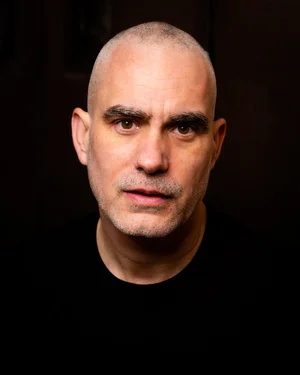
Guest feature! Lucy Olsman interviews poet, writer, spoken-word artist, beatboxer and best friend Jonathan Sijl
Jonathan Sijl, born in Zwolle, the Netherlands, is a twenty-five year old poet, writer, spoken-word artist, beatboxer, and my best friend. We met in university six years ago, when we both began our bachelor studies in English Language and Culture in Groningen. It was the height of Covid, and most of our classes were online. But amidst the turmoil of curfews and forced isolation, we decided to begin a running group with a few others. This quickly became a wine-drinking group. Throughout the years, we’ve made many friends, and lost a good few too. But Jonathan and I always stuck together. And it is my pleasure to introduce him to you.
Hi Jonathan! Please describe yourself as a poet in three words, and explain them.
I had to think about this one! Initially, my answer was authentic, open, and honest, but I’m not sure if that covers it. “Up to interpretation” might be a better fit. I am a firm believer of the concept of ignoring the author when reading a text. I apply the same idea of “up to interpretation” to my own work. Whoever hears me read a poem aloud, whoever consumes my work, its meaning is up to their own interpretation.
Why would you say you’re a firm believer in ignoring the author?
During our masters we were taught both ways: to take into account the author of the work, and to forget about them. In my case, I enjoy hearing someone’s own interpretations. I can really appreciate it when someone connects to my work without knowing anything about my life.
Can you describe what went on in your mind when inspiration for this poem (The Sandwich and the Sidewalk) struck you? How did you come up with the idea of connecting the Christian God with a homeless person?
I occasionally chat with homeless people in the city (Groningen). There’s a few I recognize as well. This particular one I’ve talked to a lot over the past couple of years. It’s interesting how people tend to look over homeless people as part of a city. You have your benches, you have your parks, and your homeless people as part of the cityscape. But at one point, these people were also children that probably went to school, had a family, and they had a whole history that led them to this moment. Whereas my history led to this moment as well, where I buy this person a sandwich.
In a way, God, for believers of the Christian faith, also becomes an inherent part of their landscape, something invisible that is always there. In this sense, a link can be made between God and homeless people. It also reminded me of a plot point of the movie Rise of the Guardians, where you have all these mythological characters like Jack Frost, Santa Clause, the tooth fairy, the Easter bunny, etc. only exist as visible and tangible beings, as long as people believe in them. Their power comes from faith itself. If they were forgotten, they would become invisible. In retrospect, I think it's a similar idea between me and God. It's been a few years since I've last called myself a Christian, and my perspective on God changed a lot over the years. In the case of this poem, I enjoyed mixing up various perspectives, and ways that I've felt over the years.
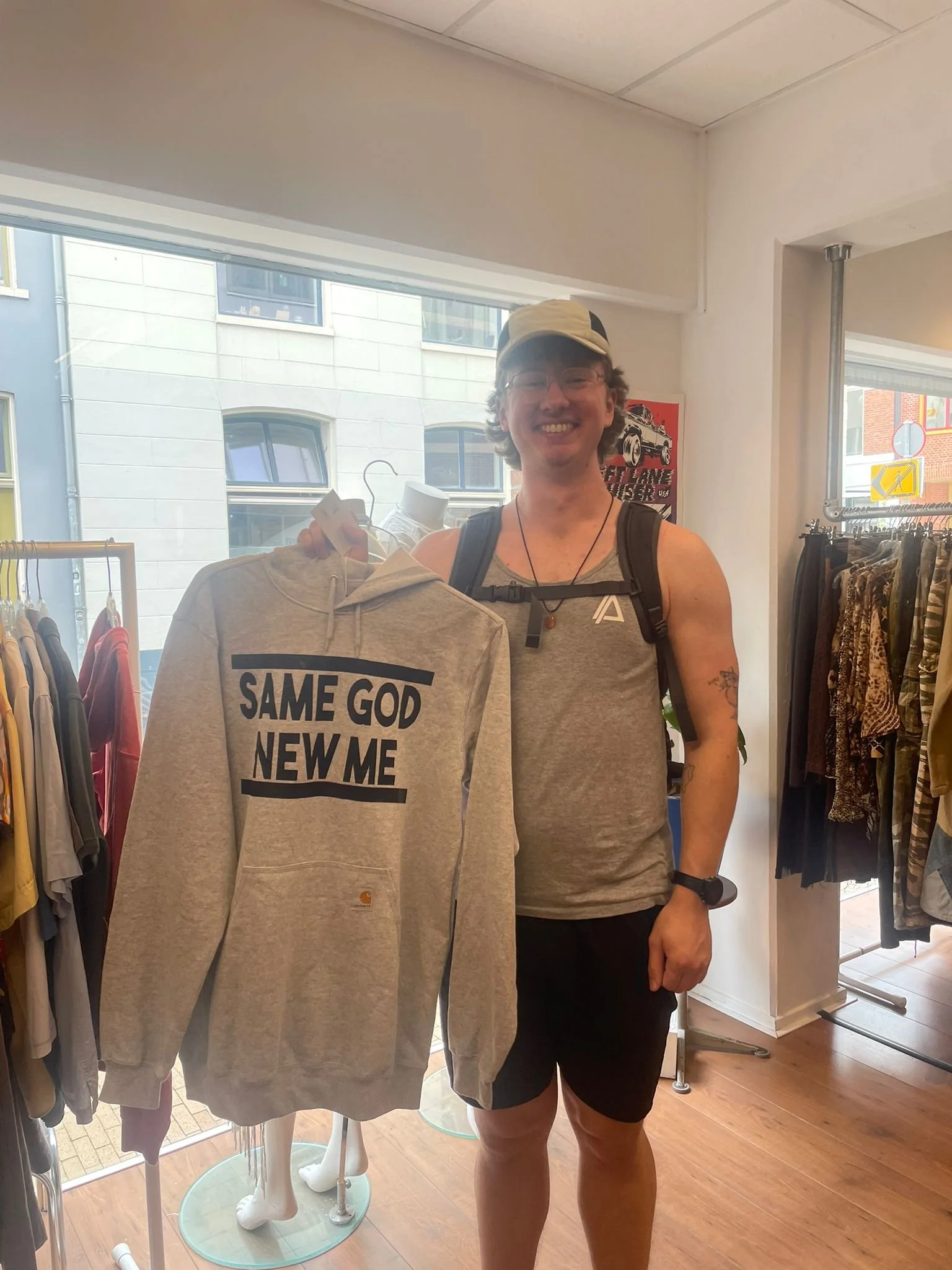
What type of Christian were you?
An ashamed one. No, just kidding. I was a mix of evangelical/pentecostal. This is a type of modern Christian that believes in a very personal connection with God, and tries to see God as an all-loving being. They also believe in spiritual gifts from the holy spirit, like the power of healing through prayer, the power of prophecy, or speaking in tongues (the language of Angels, as I understood it).
Speaking in tongues?
This is the idea that you begin to speak in a certain way after the holy spirit has ‘touched’ you. It was one of the reasons I stayed on board with my faith for so long, as I volunteered in my church. After the services, people would get prayed for. The pastor would lay their hands on a person and pray, which could be quite intense. At times, these prayers would even result in the recipient of prayer 'collapsing in the holy spirit' which meant they would physically collapse after the Holy Spirit touched them. It would be my job to catch the person and lower them gently to the ground, as they seemed to truly be affected by an intensely spiritual experience.
What was the moment where you decided to step away from faith?
There was always a constant divide between teenage-me as a growing boy, and a boy who was trying to be a good Christian. Romantic feelings, and all that stuff, felt like it was a sin. Discussing it, and just about anything to do with it, already felt sinful to me, so I would avoid talking about it, or feeling it at all. My family has always been a small, tight-knit group, consisting of my mum, my brother, and me, after my dad passed away when I was five. We would firmly believe in having a strong foundation together through our faith, and I felt that anything that deviated from that could potentially destabilise the bond of our family as a whole.
I reached a point in my first year of my studies, when I realised I tried too hard, for too long, to combine what I believed in my faith, and what I learned outside of it. There were a lot of factors involved that I haven't mentioned yet, but it nonetheless led to my realization that I could no longer call myself a Christian.
The final stanza, to me, has an undertone of anger or revenge. What does it mean to you?
I didn’t feel angry writing it. It was more a sense of disappointment and pity. In this stanza, God is just another person that wants to be loved, that wants affection. You look at this figure that you’ve been dreading encountering for a long time, and it’s a massive anticlimax. All the stress and the struggling with faith were for nothing in the end, because God, here, is also just a guy.
The final few stanzas could be read in an angry way. When performing this poem as spoken-word, the lines
How did you fall so far?
Was your throne,
Your horse,
Your holiness
So high?
can be made to sound angry. But it’s good to remember that these words occur in a moment of tenderness, during a humbling experience. “He shook my hand, and I offered him a hug. /I held him for a moment, and I asked him...” It’s a moment of compassion. It can feel embarrassing for a lot of people to ask for help, or food. And this homeless man has to ask for it every day.
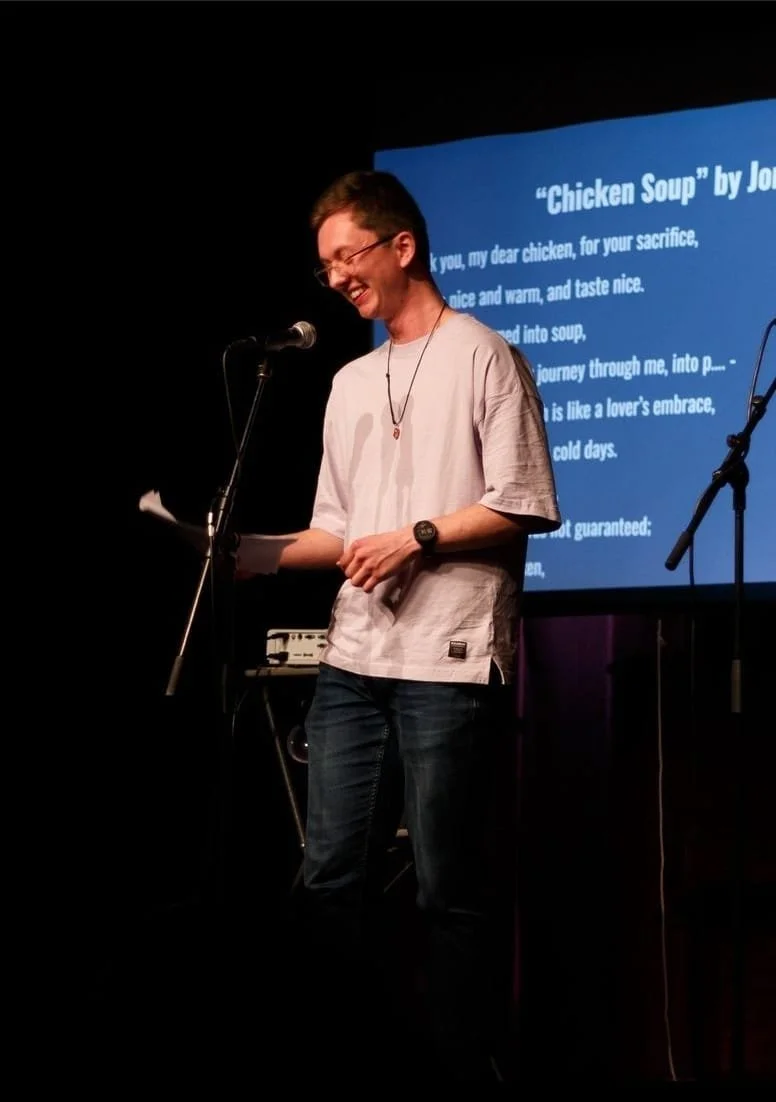
What message are you hoping to bring across to your readers?
In both life, and poetry: Try to stay open minded. Life is a lot more fun and interesting when you look at things from different perspectives. Listen to people and what they have to say. Ask questions. Oftentimes, the questions people ask say a lot more than answers.