The Anatomy Lesson revisited
Hans Rikken studied at the Academy of Visual Arts in Rotterdam, specialising in spatial design and concept development. For his final project, he was awarded the Rotterdam Art Foundation’s Encouragement Prize.
His paintings and drawings are exhibited both at home and abroad.
Various publications have appeared about his work, including two titles from Duizend en Eén publishers:
Hans Rikken Exercities, and
A Kiss for the Firing Squad, paintings and drawings, Hans Rikken.
He carries out visual art projects such as:Heart of DarknessandThe Mortuary - Theater of The World.
He has performed on many stages across the Netherlands. These include: the open-air theatre in Vondelpark, De Melkweg, Paradiso and Carré in Amsterdam.
He has contributed to numerous theatre productions as a director, actor and designer.
He directed, among others, Genet’s The Maids, Beckett’s Play and Hey Joe, Ger van Veen’s Milk and Honey, The Last Socialist and the series Thuis,Napoleon De gehangene and Madame Mère by Coen van Vlijmen, and the production Overleven in de stad.
The production Paard by Esther Gerritsen, which he directed, was the winner of the Rotterdam Monologue Festival.
For the Palagonia Foundation, he organises the Villa Palagonia lecture series.
For Kronoz, he presents the programme Kronozgasten.
Commissioned by the Mareado Foundation, he delivered the Pomona Lecture.
As a musician, he has performed with, amongst others, La Trenza, the Latzso Gypsy Orchestra and DROOG5.
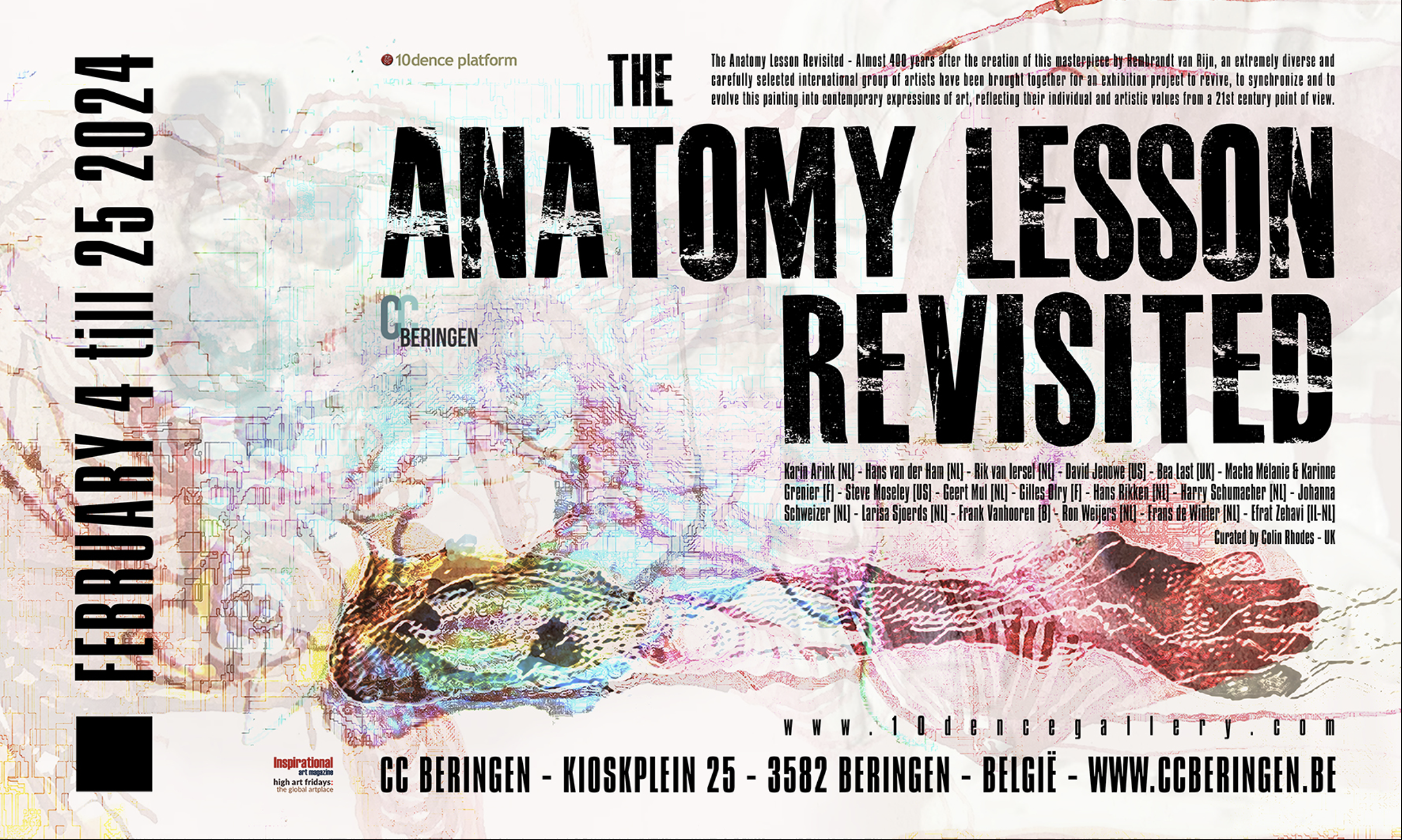
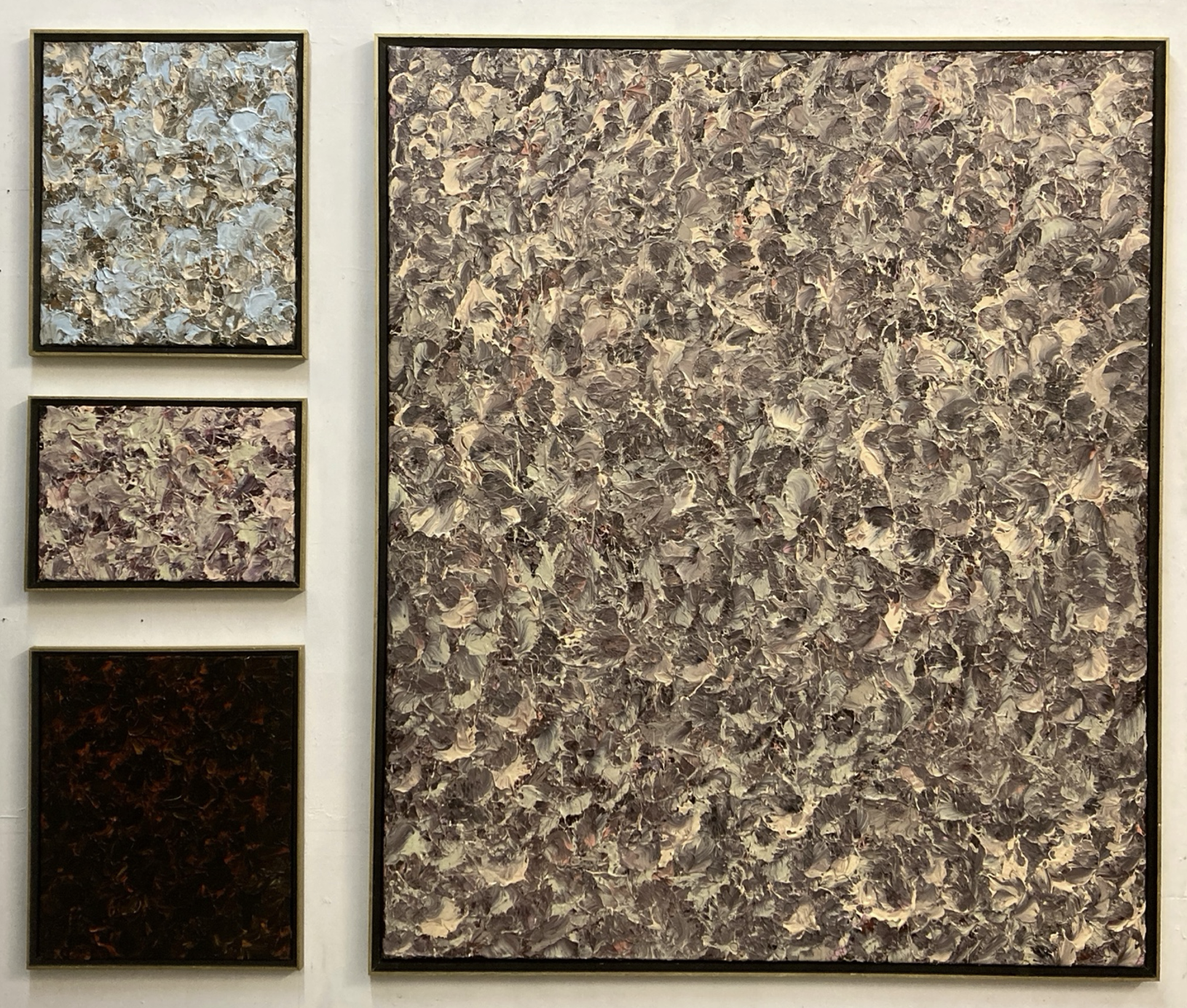
One of the most recent projects was taking part in “The Anatomy Lesson Revisited” (four paintings and a film).
The artist about his philosophy and ‘The anatomy Lesson Revisited’:
The painting, The Anatomy Lesson by Rembrandt, represents on the one hand art, the wonder of paint, the enchantment of mastery and at the same time the ruthless opening of bodies. The refined eroticism of the paint skin and the fascistoid glorification of hardness. The opening of bodies without compassion, without pity, without compassion. Opening skin. An attitude from which medicine and the visual arts are struggling to distance themselves. A world of vivisection.
An opening in dead flesh is not a wound.
Man is a technical being. He needs technology to hold his own in the world. But while technology was once something we mastered to improve life, at present we are dominated by technology and can only laboriously approach the world in a different way. Technology represents a thinking that calculates and computes, that analyses and synthesises, hierarchises and rationalises, judges and orders, manages and controls. It understands the world. All this has come to full development and completion in modern technology. This no longer involves just the will to power but the will to will. The will to power has a purpose outside itself: power. But the will to will has none: it wants to want and nothing else. Modernity is in the grip of this will to will. It leads to making, making more, making even more, destroying and throwing away. It is the seemingly endless circle of production, consumption and waste. The will to will results in the depletion and destruction of the earth. An excessive opening and de-bounding in which people have lost the ability to close and disconnect.
This results, among other things, in an epidemic of depression.
Today's society in which each is the entrepreneur of himself, reigns the economy of survival diametrically opposed to the non-economy of the art of eros and death. Neoliberalism with its disinhibited ego - and achievement - impulses is a social order from which eros has disappeared entirely.
Art, on the other hand, is a science of freedom, and an act of freedom is not controllable but rather akin to a miracle. It happens to you. The free act also includes the abyss of nothingness that opens up to any act that cannot be attributed to a reliable chain of cause and effect.
Becoming an abyss. An open wound.
The miracle of art is like the miracle of love, it overwhelms and wounds us. The wound does not endanger life but makes life worth living.
The anatomy lesson shows the curiosity of the opening in dead flesh. The refined eroticism of paint skin could wound a viewer. It is not the representation that is of great importance but the painting, the painting-thing, the paint-thing that, however, would not have come about without the cutting into the dead flesh. It is the paint-skin that could make you fall in love with the painting.
An opening in dead flesh is not a wound.
Love knows the negative power of being wounded, of being overwhelmed, of being upside down. Making or dealing with a work of art also has that negative force of being wounded, being overwhelmed, being upside down.
This is true for the artist but also for the spectator. He too should put aside his prejudices, the little voices in his head, his fears and desires for a moment. A work of art is a work. It should work. Work directly on the nerves and not diversions via the brain, via grasping what is a grasping. A mastery.
A work has to work on the nerves. It has to resonate in your body. Riveting. That is why you should not only look at artworks but also listen to them. Making a work depends on its quality but also on the willingness of the viewer to make his or her body available. To be wounded by the work. To put themselves on the line. A work comes alive only in contact with the viewer. In the way the work resonates in him or her. This causes a rupture. A gap in knowing. There is an outside that unsettles everything within the system of a self. Being liberated from your-self is an erotic experience. Indeed, the true essence of love, or of art, is giving up the consciousness of self and finding oneself in the other, in the work of art. The gift of the artwork after losing, giving up myself, has preceded it. It is a dying into the other but this death is followed by a return to oneself which is a different self than before.
It is the skin of the painting that shines. Experiencing your own body through the skin of the painting. Through the scanning of the work let the work resonate in yourself. Not taking possession of the work but allowing it. Opening up to the gift, to the insight that is not a product of thinking performance. Being wounded by the superficial depth of the skin. Getting wounded by being on the skin of the work.
Then there is a chance that a space opens up.
Then a Void or empty space opens up in my mind: a "Cloud of non-knowing". My bondage and dependence on own ideas, own possessions, own certainties, spiritual and material, self-will, I will have to let go in order to truly reach the Void. To become an abyss. A preparatory void.
"Man must be so empty of all things and works, inner as well as outer, that he can be his own place for the work of art, in which the work of art can work ". A space in which something can be given. Where something can fall to me. That a miracle can take place. To get that far, I have to be, to use a term of Eckhart's, separated. Free from strange images, desires, fears. Empty and therefore receptive.
It is a mindfulness of the most original 'happening', completely open to the miracle, willing to receive. It is prepared to receive and prepare a 'home' for that which is received. It allows itself to be thought by the non-thought and allows itself to be 'said' by the unsaid. It does not casually pass by what is given, but marvels at the givenness of what is given. It is receptive and waiting, open to a very original 'giving'.
To be able to do this, you have to detach yourself from the social. This disconnection from the social has become extremely difficult. Constantly people are called upon to participate. A total mobilisation. Money has to be earned because again to spend as quickly as possible. Man as a money pump to keep the economy going. This not only degrades people but also hinders the possibility of a real life instead of just surviving. People have become consumers moving in a digital panopticon. Watched, watched and controlled on all sides. A counterforce is missing.
People voluntarily expose themselves to the panoptic gaze, they themselves obediently build the digital panopticon by revealing themselves and putting themselves out there: the inhabitant of the digital panopticon is victim and perpetrator at the same time, Behold the dialectic of freedom. Freedom reveals itself as control.
This produces an era in which, in an excessive opening and de-bounding, people have lost the ability to close and disconnect. This results in an epidemic of depression.
A society in which each is the entrepreneur of himself, the economy of survival reigns supreme, diametrically opposed to the non-economy of the art of eros and death. Neo-liberalism with its disinhibited ego - and achievement - impulses is a social order from which eros has disappeared entirely.
Dealing with art offers a counterbalance because in it one has the possibility to withdraw for a moment from the total mobilisation. To detach oneself for a moment from the social. To be wounded. To be freed from oneself for a moment which is an erotic experience. A dying and being reborn in a work of art. Disconnecting from the social is a political act. Eros is an inspiration a source of energy for political revolt.
So in a society running up against its limits on all sides, investment in art is vital. It represents a basis for arriving at new insights. New insights that could free people from the panopticon in which they can only survive. Survive as an un-dead, too dead to really live and too alive to die.