

Egidius waer bestu bleven
Egidius waer bestu bleven
Mi lanct na di gheselle mijn
Du coors die doot du liets mi tleven
Dat was gheselscap goet ende fijn
Het sceen teen moeste ghestorven sijn
Nu bestu in den troon verheven
Claerre dan der zonnen scijn
Alle vruecht es di ghegheven
Egidius waer bestu bleven
Mi lanct na di gheselle mijn
Du coors die doot du liets mi tleven
Nu bidt vor mi ic moet noch sneven
Ende in de weerelt liden pijn
Verware mijn stede di beneven
Ic moet noch zinghen een liedekijn
Nochtan moet emmer ghestorven sijn
Egidius waer bestu bleven
Mi lanct na di gheselle mijn
Du coors die doot du liets mi tleven
Dat was gheselscap goet ende fijn
Het sceen teen moeste ghestorven sijn
Egidius, where have you gone?
Egidius, where have you gone?
I long for you, my mate
You tasted death, you left me life
Your company was good and nice
It seemed we would die together
Now you have been taken up into heaven
More radiant than the sunshine
All joy has been given to you
Egidius, where have you gone?
I long for you, my mate
You tasted death, you left me life
Now pray for me, I have yet to be unhappy
And suffer pain in the world
Reserve my place next to you
I still have to sing a little song
But I too will have to die sometime
Egidius, where have you gone?
I long for you, my mate
You chose death, you left me life
Your company was good and nice
It seemed we would die together
The song Egidius waer bestu bleven (Translation: Egidius, where have you gone?) is an early rondeau from Flemish literatureand a famous Middle Dutch song.
The song was found in the Gruuthuse manuscript, which dates from around 1400 and includes musical notation. It was first published in 1849 by Charles Carton (1802 - 1863), a Belgian catholic priest. In 1966 Klaas Hanzen Heeroma (1909 - 1972), a Dutch poet and linguist, published a new edition of the songs and poems from the Gruuthuse manuscript which reached a broad audience. In 2007 the manuscript was bought from its private owner by the Royal Library of the Netherlands (Dutch: Koninklijke Bibliotheek) in The Hague.
The song was written in the late 14th century by an author who was first identified as Jan van Hulst, and later as Jan Moritoen--the manuscript has a number of authors. Egidius was tentatively identified as Gillis Honin, who is known to have died suddenly on October 8, 1385.[1] According to Professor Frits van Oostrom, this is the most anthologized Dutch poem.[2]
Egidius waer bestu bleven is an elegy or lamentation. It is about the death of a friend called Egidius, a Latinised version of the Flemish name Gillis. The poet, who calls out to Egidius rather than just mention him, envies Egidius because he has ascended to the heavens whilst the poet is still suffering on earth. He begs Egidius to reserve a place next to him in heaven.
Source: Wikipedia
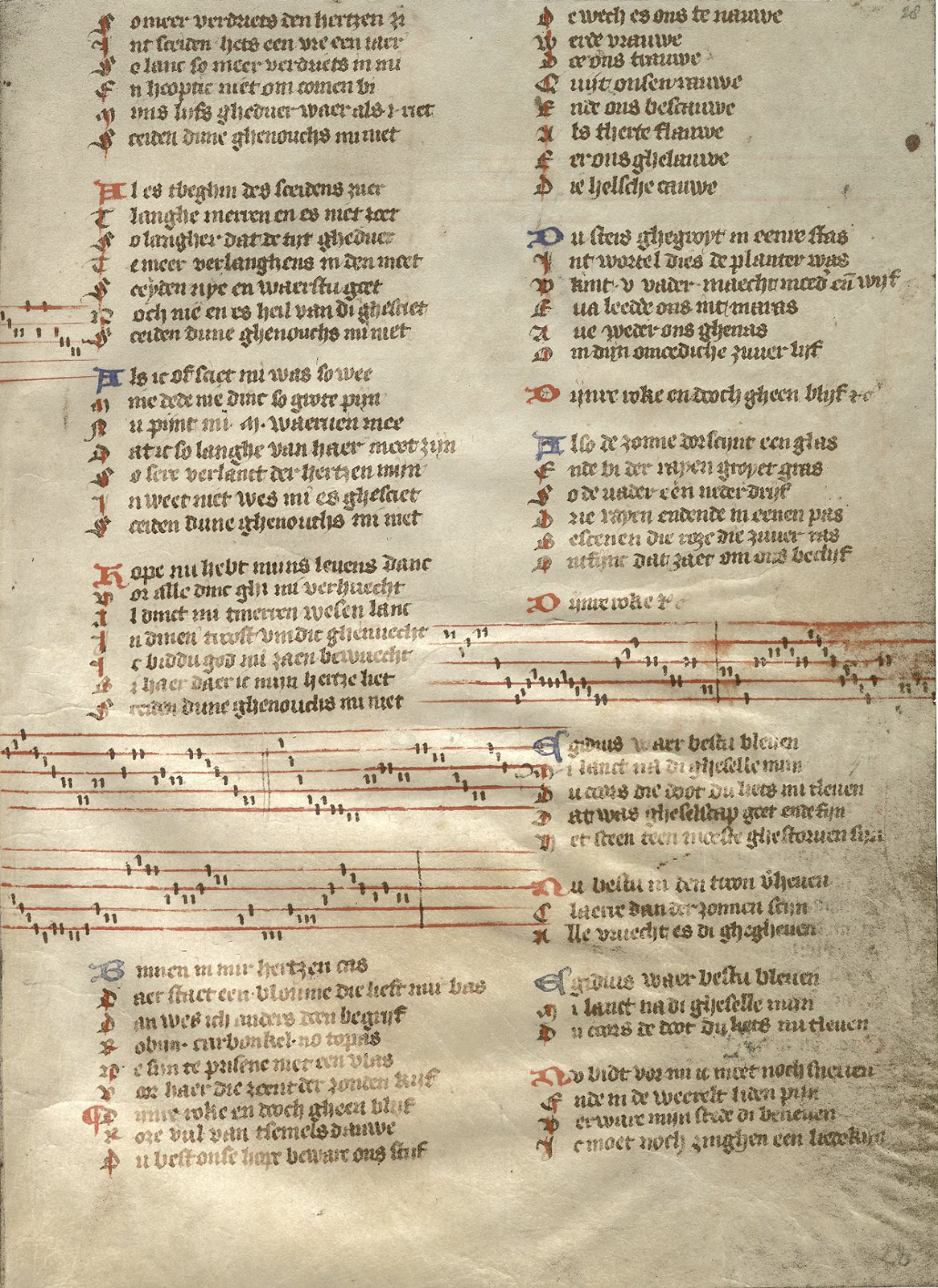
Folio 28r of the Gruuthuse manuscript. Bottom right: the song Egidius waer bestu bleven with the music notes.
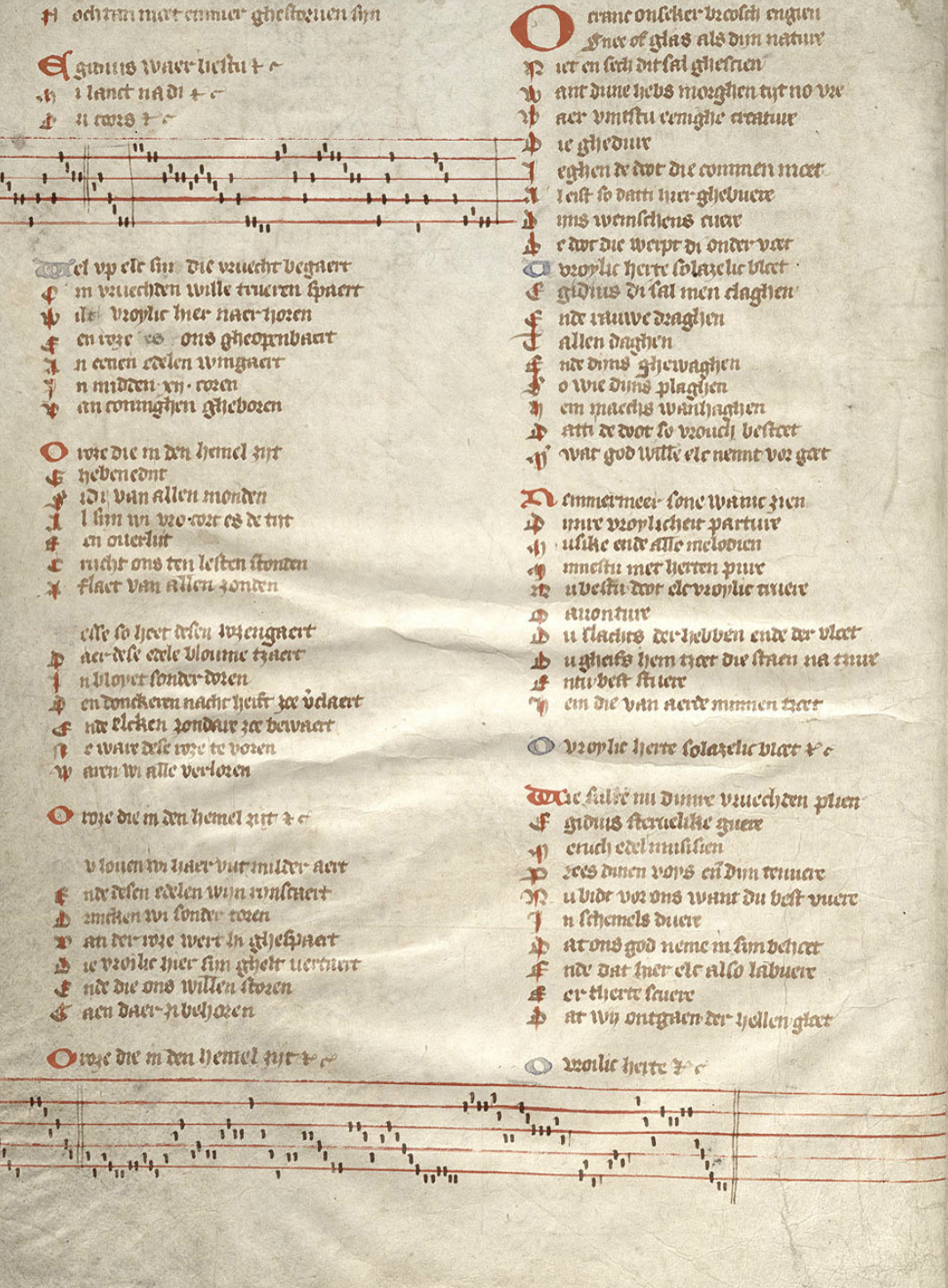
Folio 28v of the same. Top left: song ending.